All case studies

Sodimac Colombia · E-commerce · UX proposal

Redesigning account deletion as an informed and safe decision.

Research and conceptual definition of a flow that protected active processes and offered relevant solutions without preventing people from exercising their decision.
01 / Context

The starting point

A seemingly simple action depended on several operational processes.

The request came from the Sodimac Colombia team through the Product Manager in my design squad. The existing flow was basic and needed to be assessed against user expectations, market practices and the operating reality of a home-improvement retailer.

Deleting an account could affect orders, scheduled services, claims, credits, balances or documents that still required access.

The problem

Avoiding both accidental irreversibility and forced retention.

Too direct

It could hide consequences or unintentionally remove access to active processes.

Too obstructive

It could become a deliberate barrier and damage trust.

Design questionHow might we let people delete their accounts with clarity and autonomy while addressing situations that could be prompting an unnecessary or premature decision?
02 / My contribution

Research before drawing

I reframed a generic flow as a product problem with distinct causes and states.

Benchmark

I reviewed deletion experiences across digital products and comparable retailers.

Reasons

I classified common causes so the experience could address the problem behind the request.

Edge cases

I identified orders, services, balances, claims and other processes that could remain active.

Conceptual flow

I structured contextual alternatives, confirmations and consequences for team evaluation.

03 / Research

Two reference levels

Global patterns and the specific retail context.

Digital products

Account-management references

Instagram, Facebook, LinkedIn, Amazon, WhatsApp, Dropbox, Slack, Reddit, GitHub, Netflix, Pinterest and X/Twitter.

Home improvement

Comparable retailers

Home Depot, Lowe's, Menards, Ace Hardware and Wayfair.

The goal was not to copy an interface, but to recognize patterns: clear consequences, identity verification, active-process detection, relevant alternatives and final confirmation.

04 / Findings

Understanding intent

The same action could conceal very different problems.

01Privacy or security
02Low account usage
03Home project completed
04Moving or selling
05Poor experience
06Preference for another retailer
07Duplicate account
08Too many communications
05 / Proposal

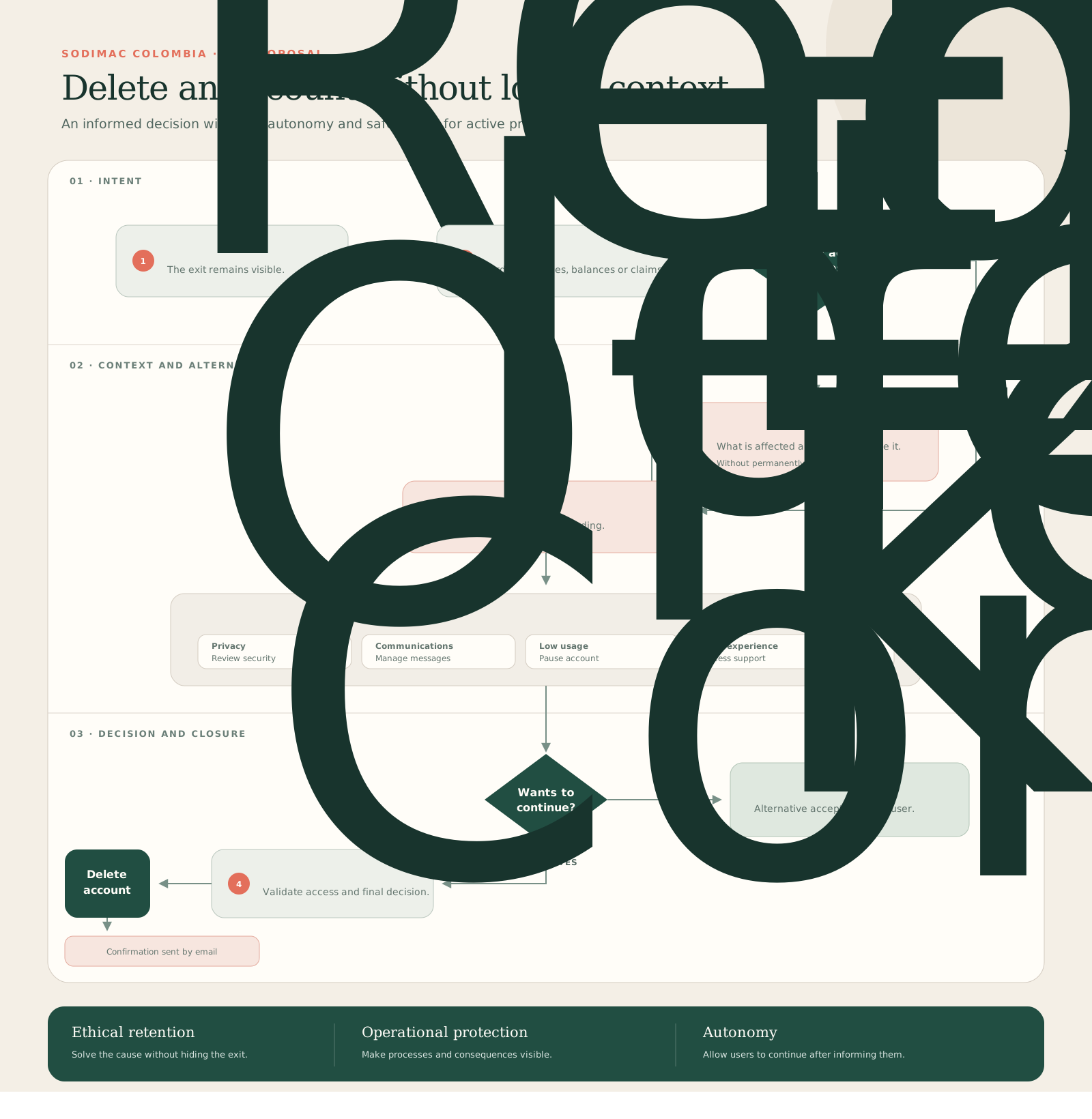
Retention as a consequence of solving

Inform, offer a relevant alternative and keep the exit available.

The flow was not designed to persuade at all costs. People could reject the alternatives and continue with deletion.

Conceptual account-deletion flow: request, active-process verification, reason, alternatives and confirmation.Enlarge diagram ↗
Proposed conceptual flow

Retention is framed as the result of solving a cause—not adding friction or hiding deletion.

Editorial reconstruction for this case · Not an implemented interface
06 / Safeguards

Before an irreversible action

The system needed to reveal what could be affected.

Orders in progress
Scheduled services
Cancellations or rescheduling
Open claims
Credits or balances
Warranties and documents
PrincipleEthical retention means solving causes, not making decisions harder.

Verifiable outcome

An evaluable alternative—not production results.

Organized reasons
Different responses according to the cause.
Operational states
Active processes incorporated into the journey.
Informed decision
Consequences and confirmations before closure.
07 / Outcome

Transparency about scope

The proposal was not implemented as designed.

Engineering effort and available time influenced the decision not to continue with this scope.

  • No retention metrics are claimed.
  • No nonexistent conversion impact is presented.
  • The case’s value lies in its research and the scenarios it revealed.

This case demonstrates the analysis and decisions considered—not a post-launch outcome.

08 / Learning
A UX solution is not defined by usefulness alone. It must also fit the product moment, technical capacity and available priorities.

The project reinforced that a simple action can depend on many processes, that ethical retention begins by understanding the cause and that a proposal can reveal valuable risks even when it does not reach production.

Next case

HealthTech MVP Strategy and Architecture.

Read next case Back to all case studies